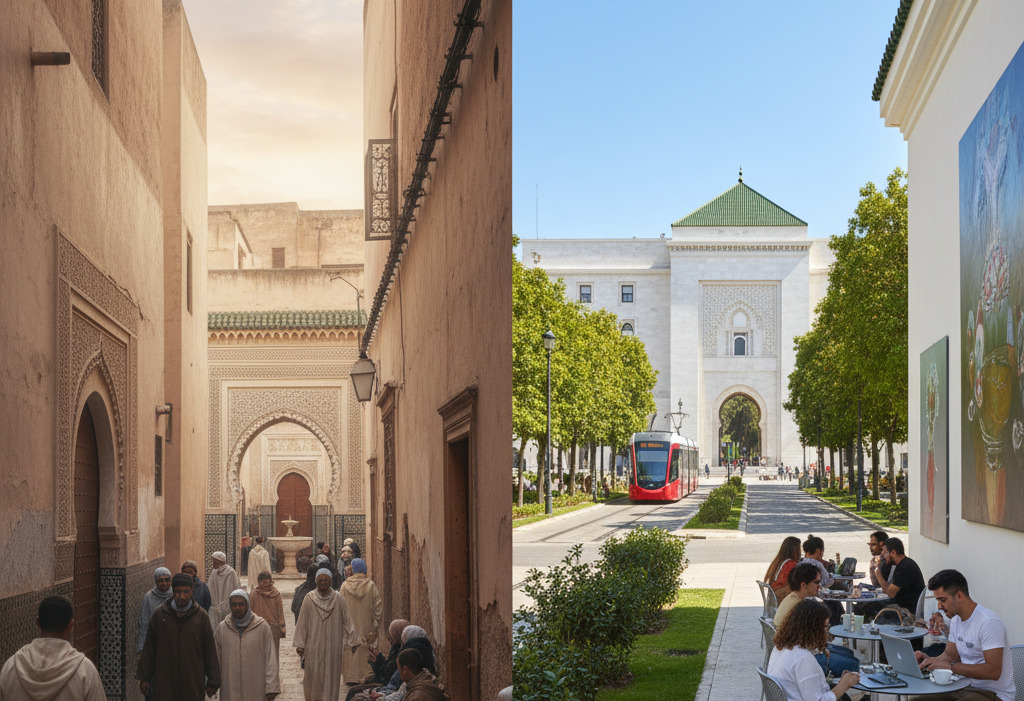
Morocco is a land of history, culture, and nature in a state of being alive. Stepping into its streets is like entering a book. From the crowded souks brimming with colors to the old medinas resonating with centuries-old stories, every corner speaks a tale.
The Atlas Mountains stand like sentinels, watching over the horizon, and the Sahara Desert’s golden sands go on forever, with sunsets you remember. On the Atlantic coast, places like Essaouira show a timeless beauty. Every area has a different face of Moroccan life, with tradition, culture, and natural beauty. Whatever the terrain, whether adventure, tranquility, or history, Morocco provides it in spades that linger long after you’ve left.
Morocco holds secrets that surprise even seasoned travelers. It has four imperial cities—Marrakech, Fes, Meknes, and Rabat—each with its own story and character. Arabic and Amazigh are the main languages, yet French is widely spoken due to the country’s colonial history.
The nation has been a hit with film crews. UNESCO World Heritage sites like Ait Benhaddou have been featured in movies like Gladiator and TV series like Game of Thrones. Morocco is also a nation of contrasts: the dunes of the Sahara Desert, snow-capped mountains of the High Atlas, and busy urbanized areas all found within the same nation. It’s a playground for anyone who likes adventure, culture, and nature.
– Paul Bowles
Chefchaouen – The Blue Pearl of Morocco
Hidden in the Rif Mountains, Chefchaouen is a blue-hued town with every tint of the color. Dubbed the “Blue Pearl,” it is a living painting. Unlike bustling downtowns, it is more relaxed. As one strolls its narrow streets, travelers find handcrafted workshops, tiny cafes, and quiet spots that appear not to have aged.
Photography enthusiasts tend to be enthralled here. From stairwells illuminated in blue to wide expanses of the Rif Mountains, each panorama is a storybook of magic. The town mirrors the Berber way of life that unfolds discreetly, with adventure and serenity wrapped into one.
Marrakech – Where Tradition Meets Modern Magic
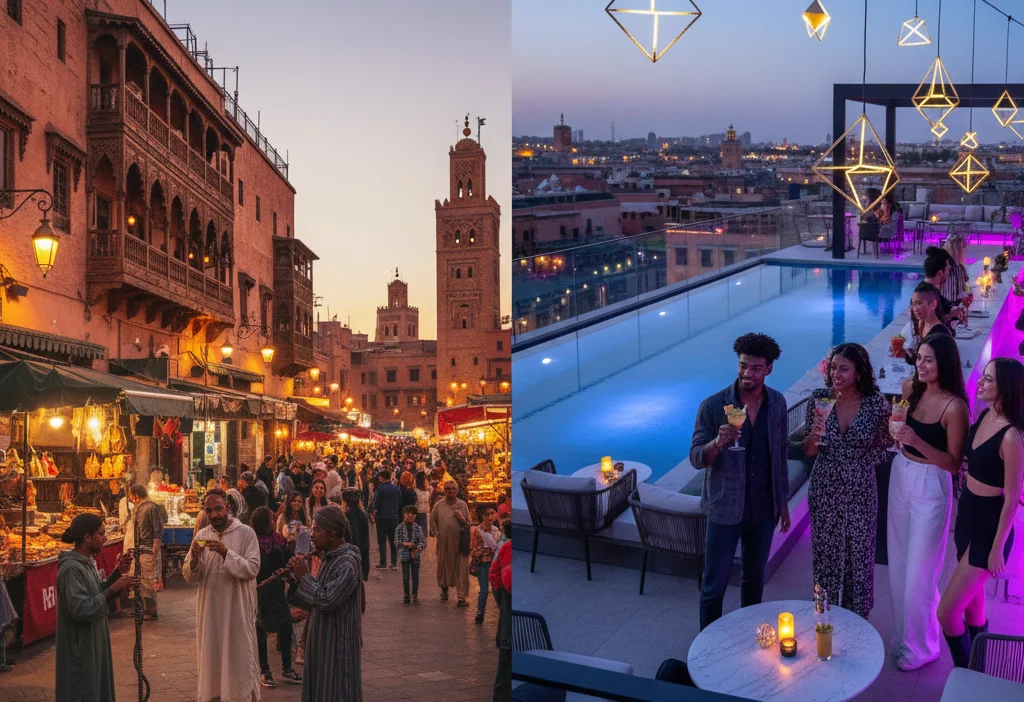
Marrakech is throbbing with vitality. The medina is filled with the aroma of spices, snake charmers play music, and Djemaa el-Fna Square comes alive at night with tale-tellers, musicians, and street vendors. Red-painted city walls radiate softly as the sun sets, and Marrakech’s nickname is “The Red City.“
But the city is not stuck in time. Rooftop cafes and boutique riads, and contemporary art galleries are juxtaposed with ancient buildings. The blend of new and old is vibrant, and Marrakech is a must-visit destination for anyone traveling to Morocco.
Merzouga and the Sahara Desert – Golden Dunes & Starry Nights
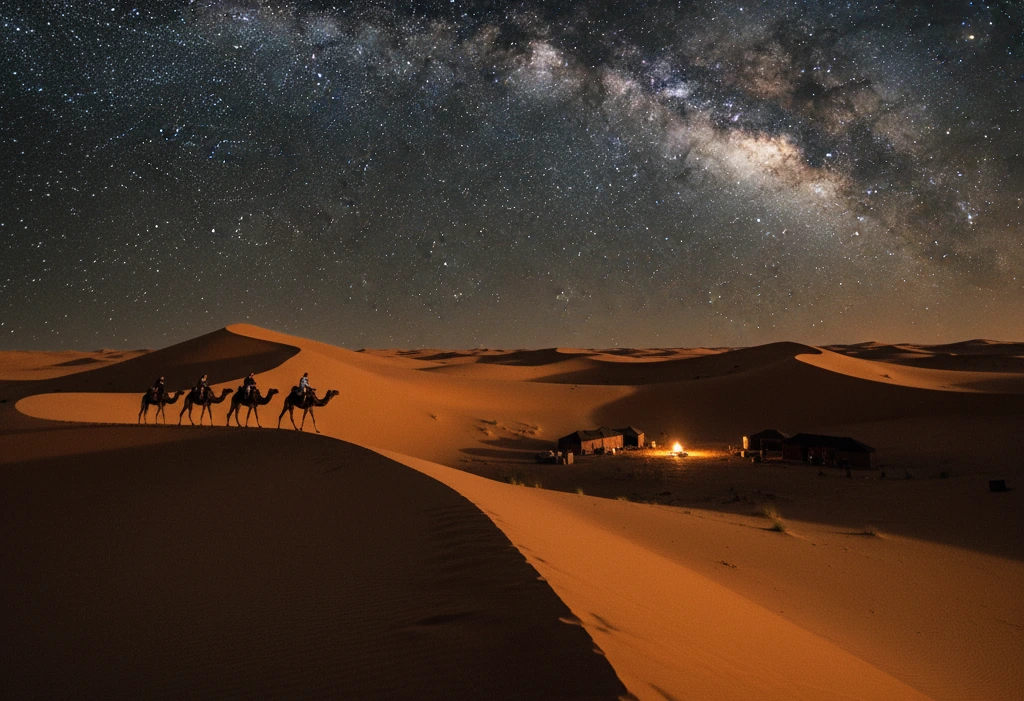
Merzouga provides the opportunity to witness the Sahara in all its beauty. Sand dunes roll forever, shaped by wind. Camel rides during sunset provide a serene, near-meditative experience away from the clutches of urban life.
As night descends, the desert sky changes. Stars twinkle more brightly here than nearly anywhere else, unobscured by artificial light. For visitors, it’s an experience that lingers—a still, nearly spiritual bond with nature.
Atlas Mountains – Morocco’s Majestic Backbone
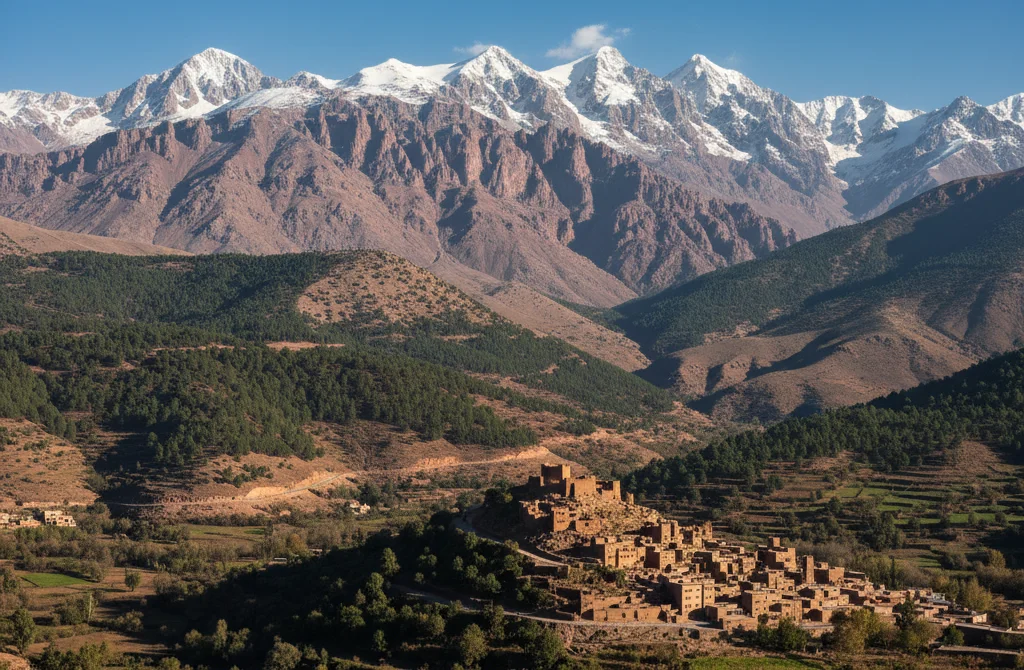
The High Atlas Mountains run through central Morocco. Ifrane is covered with skiing and snowboarding in winter; trails call to hikers and climbers in the summer. Berber villages scatter the valleys, a glimpse into a traditional lifestyle very much present.
The Anti-Atlas Mountains are less visited but no less beautiful. Unspoiled landscapes, dramatic gorges, and friendly locals make them ideal for travelers looking for quieter escapades.
Ait Benhaddou – A Living Movie Set in the Desert
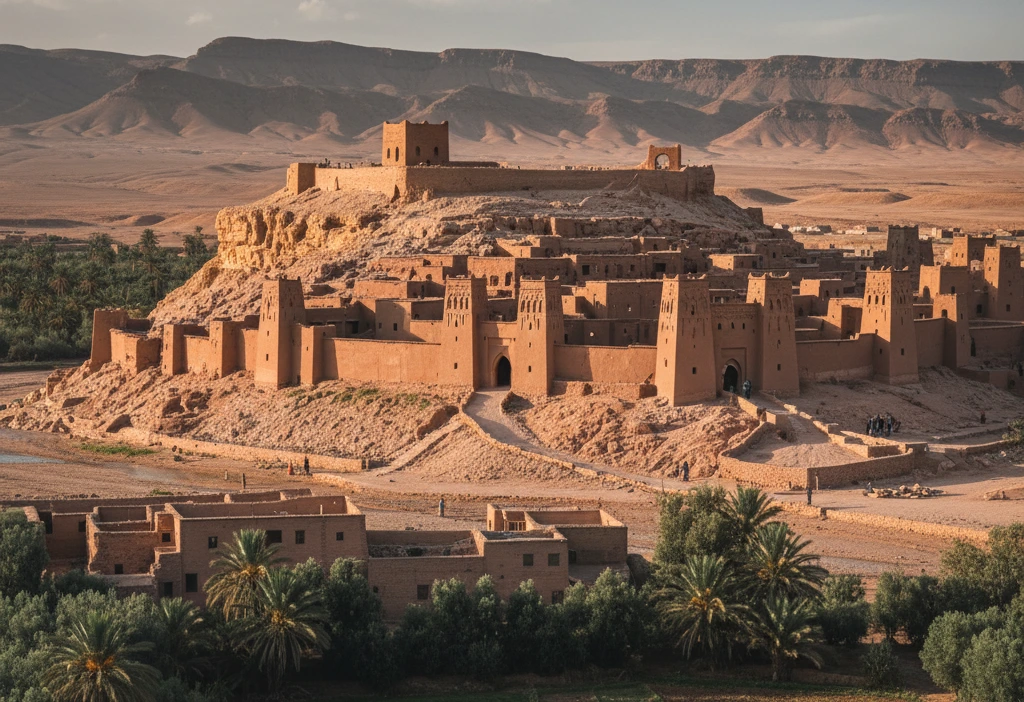
Ait Benhaddou is a highlight of Morocco. Constructed out of stone and clay, this walled village maintains hundreds of years of Moroccan history and architecture. Its importance has been accepted by UNESCO, and it is being protected for generations.
Cinema buffs will identify its streets from a myriad of movies. It is like walking into a fairy tale here, where the walls tell stories of history and fantasy.
Fes & Rabat – The Historic and Political Capitals
Fes is Morocco’s spiritual center. Its religiously narrow medina alleys, ancientmosques, and secret schools of learning leave visitors feeling transported in time. Each step speaks of faith, tradition, and culture.
Rabat provides a more relaxed pace. As political capital of Morocco, it is home to the royal palace, museums, and contemporary cafes. Together, Fes and Rabat uncover the balance between Morocco’s spiritual and governmental heritage.
Agadir & Taghazout – Sun, Sand, and Surf
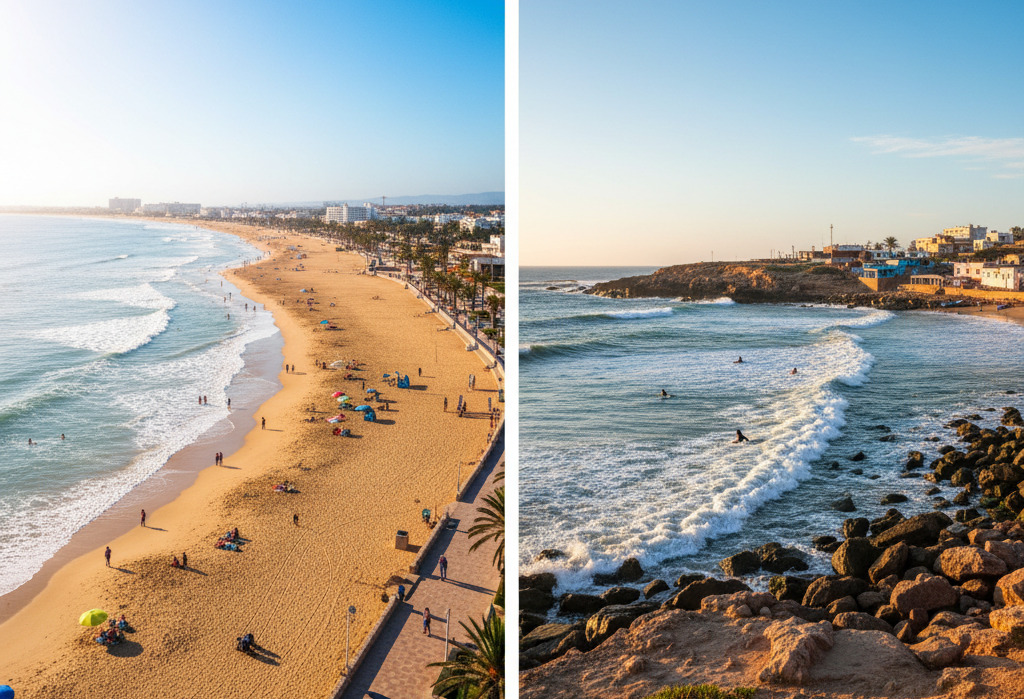
Agadir provides long beaches, sunny skies, and up-to-date resorts. It’s perfect for tourists in search of leisure. Taghazout, located near it, draws surfers globally. Its waves and friendly environment make it an emblem of coastal Moroccan life, merging adventure and relaxation.
Essaouira & Legzira Beach – Coastal Beauty and Iconic Arches
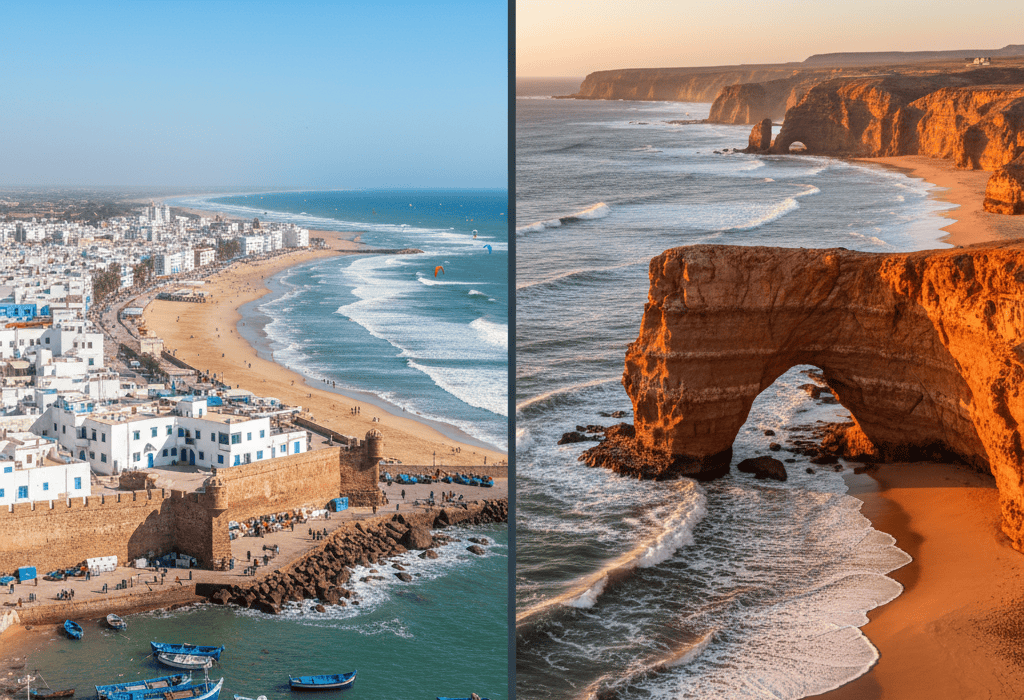
Essaouira is delightful with sea breezes, vibrant markets, and music heritage. Its coastal cliffs provide sweeping Atlantic views.
Even farther south lies Legzira Beach, which in the past had iconic red rock arches carved out. While nature has altered them, the view remains emblematic of Morocco’s picturesque landscapes, which combine ocean power with dramatic landscapes.
Ouzoud Waterfalls & Natural Wonders of Morocco
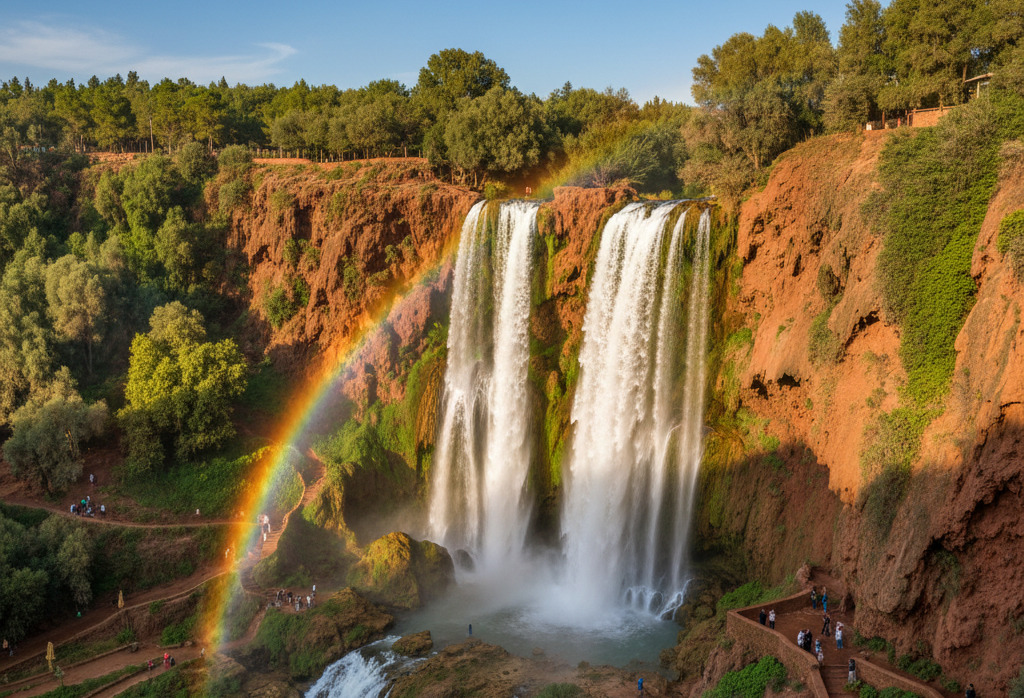
Ouzoud Waterfalls are one of Morocco’s most stunning natural attractions. Water cascades from high cliffs, surrounded by olives and mischievous monkeys. Tourists can come close to the falls in boats or trek on paths overhead, feeling both excitement and peace.
Hidden Gems – Volubilis Ruins, Todra Gorge, Paradise Valley
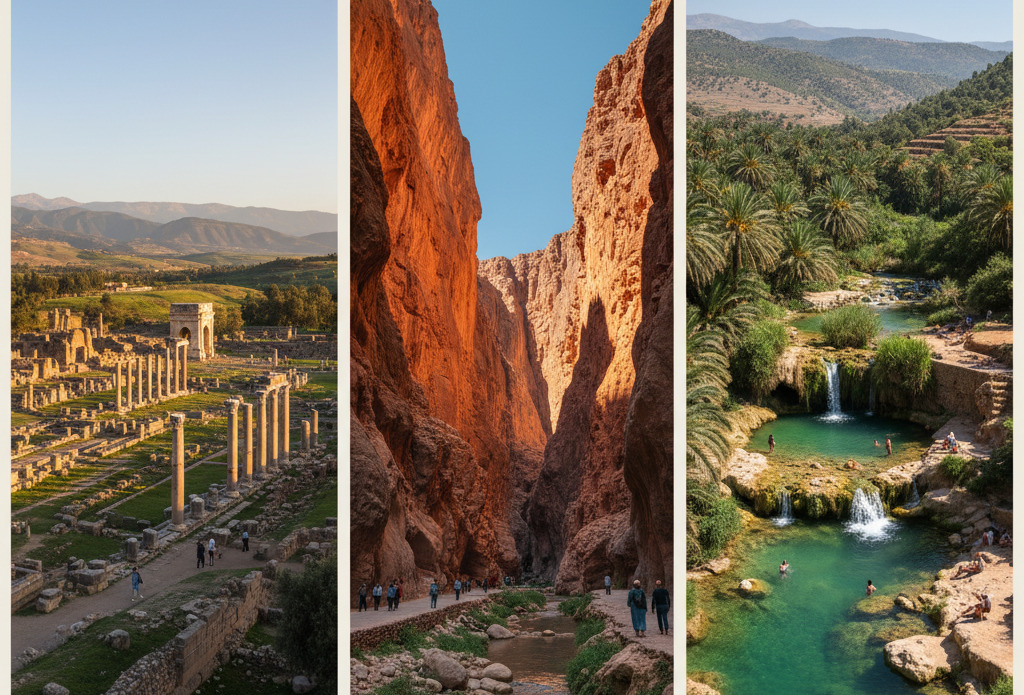
Volubilis uncovers Morocco’s Roman heritage, with arches, mosaics, and broad streets recounting old city life. Todra Gorge awes with sky-high walls carved over centuries by water. Paradise Valley presents a verdant oasis of palms, streams, and natural pools. Together, they depict Morocco’s.hidden treasures away from the tourist routes.
The Marrakech medina, with its bustling souks and vibrant Djemaa el-Fna square, is the top tourist attraction.
Outro – Why Morocco is a Must-Visit Destination
From the blue streets of Chefchaouen to the golden dunes of Merzouga, Morocco provides a trip full of contrast and beauty. There’s a story behind each spot—culture, history, or nature. A visit here leaves impressions, challenging visitors to engage with both the earth and its people.
Why It's Unique
When you think of Morocco, you picture deserts, mountains, sun-soaked beaches, and bustling cities all in one place. Walking through its streets, you can feel the mix of Arab,Berber, and European influences everywhere—it’s colorful, full of history, and somehow, it just touches you
When to Visit
Spring (March–May) and fall (September–November) offer comfortable temperatures, clear skies, and fewer crowds. The Sahara is best visited during cooler months, while the Atlas Mountains are ideal in winter for snow lovers and summer for hiking.
How to Get There
The primary international flights land at Casablanca, Marrakech, or Agadir. Trains and buses cover most cities effectively in Morocco. For secluded places, it is best to rent a car or have a local guide.