New Zealand is like a present for anyone who adores the beat of the sea, with over 15,000 kilometers of coastline. From the wild surf of the North Island to the secluded coves nestled in the South Island, each beach has a tale to tell. Some beckon you to run after waves, while some look as if made for leisurely strolls or moments of tranquility. Whether you’re planning a coastal holiday or just a weekend escape from the city, this guide reveals the best beaches in New Zealand — the famous spots, the secret ones, and everything in between.
New Zealand beaches aren’t just sand and ocean; they’re where people and tourists meet nature. Expect to see black volcanic sand beaches, golden bays glowing with sunlight, and cliffs that are straight out of a picture. These beaches are also ideal for taking photographs, picnics, or even kayaking through crystal waters.
The North Island beaches are a combination of untamed energy and gentle calmness. Just a few hours’ drive from Auckland, there are simple day-trip possibilities, but head north or east and secluded bays beckon those with a love of adventure. Along the way, you’ll ride through small beachside towns, stroll under pōhutukawa trees, and sniff the salt air in the breeze. Most of the beaches are well-equipped – parking, toilets, surf clubs, and cafes in close proximity – but their real beauty is their character.
— Danny Kaye
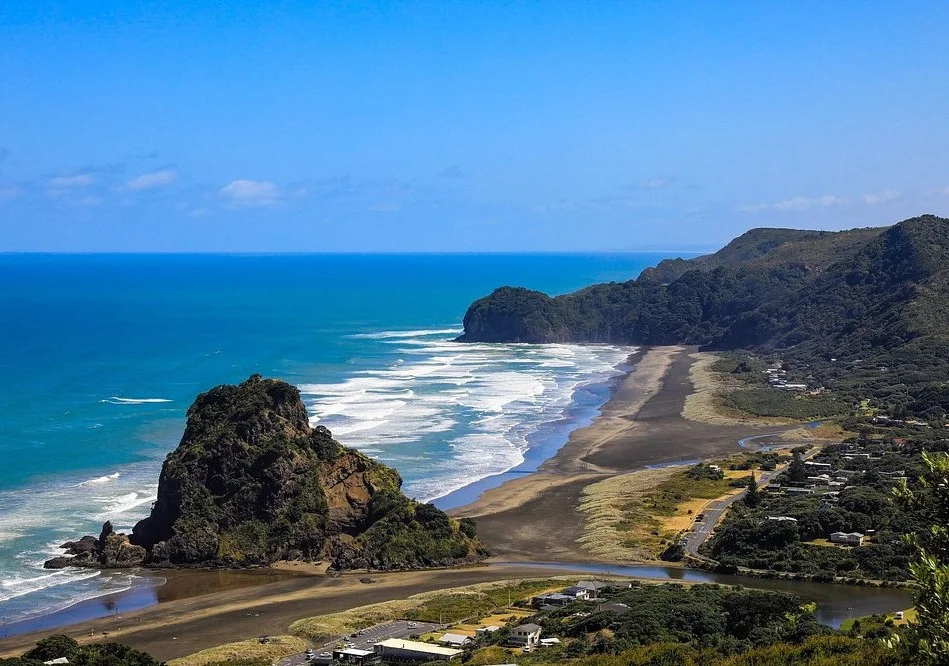
Piha, near Auckland – describe surf, scenery, nearby attractions
Piha Beach is Auckland’s most dramatic beach location. Black sand sparkles in the sunlight, formed from volcanic rock, and the waves attract surfers internationally. View of Lion Rock, proudly situated among the sands, provides the area with a savage, untamed atmosphere. If you tackle nearby tracks, you’ll be rewarded with panoramic views over the coastline. Intimate cafés close by provide a relaxing haven after a long surf ride or trekking session, so Piha is an ideal city break for locals and visitors
Ninety Mile Beach, Northland – mention sand driving, sunsets
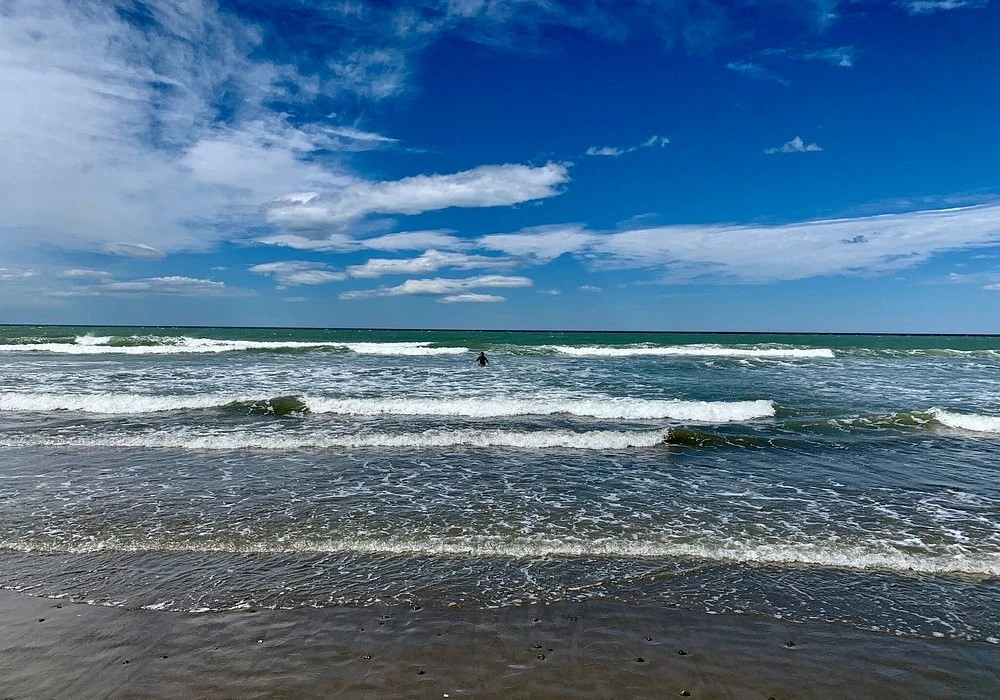
Stretching near-endlessly, Ninety Mile Beach hugs Northland’s western coast. Not nearly as long as its name would suggest, it’s more like 88 kilometers of golden sand and waving dunes. Locals drive 4WD down the beach, and others just walk until the horizon blends into the sea. The sunsets are stunning — the sky is a deep orange and violet as waves gently crash in the distance. It’s the sort of spot where time stands still, particularly for visitors in pursuit of peace and seclusion.
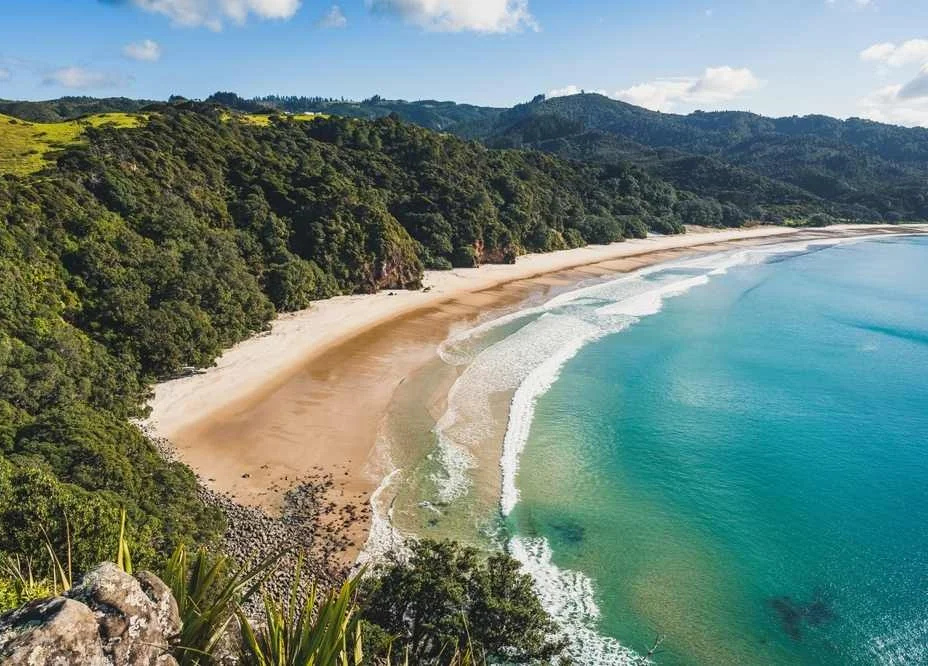
New Chums Beach, Coromandel Peninsula – accessibility, hidden gem tips
Getting to New Chums Beach is an adventure in itself. A short walk from native forest and over rocks, the trees part to a secluded expanse of white sand and blue water. Not many bother to make the trip here, and that keeps it serene and unspoiled. It’s one of those New Zealand’s secret spots where you can be quiet and think the world has slowed down just for you.
Ngarunui, Raglan – surfing, local cafes
Raglan is renowned among surfers, and Ngarunui Beach is where it all starts. With regular waves and soft breaks, it’s ideal for learners and experienced surfers alike. The town is laid-back — bare feet locals, surfboards on shoulders, and tiny cafés where laughter blends with the ocean sounds. After a surf, many stop by for a smoothie or coffee and make their way back to the beach one last time to gaze at the sunset.
Wainui, Tairāwhiti – swimming, scenic highlights
Wainui Beach welcomes the morning sun before most places in New Zealand. The sunshine illuminates the dunes and the water glows with heat. Families adore this place for swimming and long morning strolls. The subtle waves and native bushland environment make it a favourite among locals who cherish relaxation along with natural attractions.
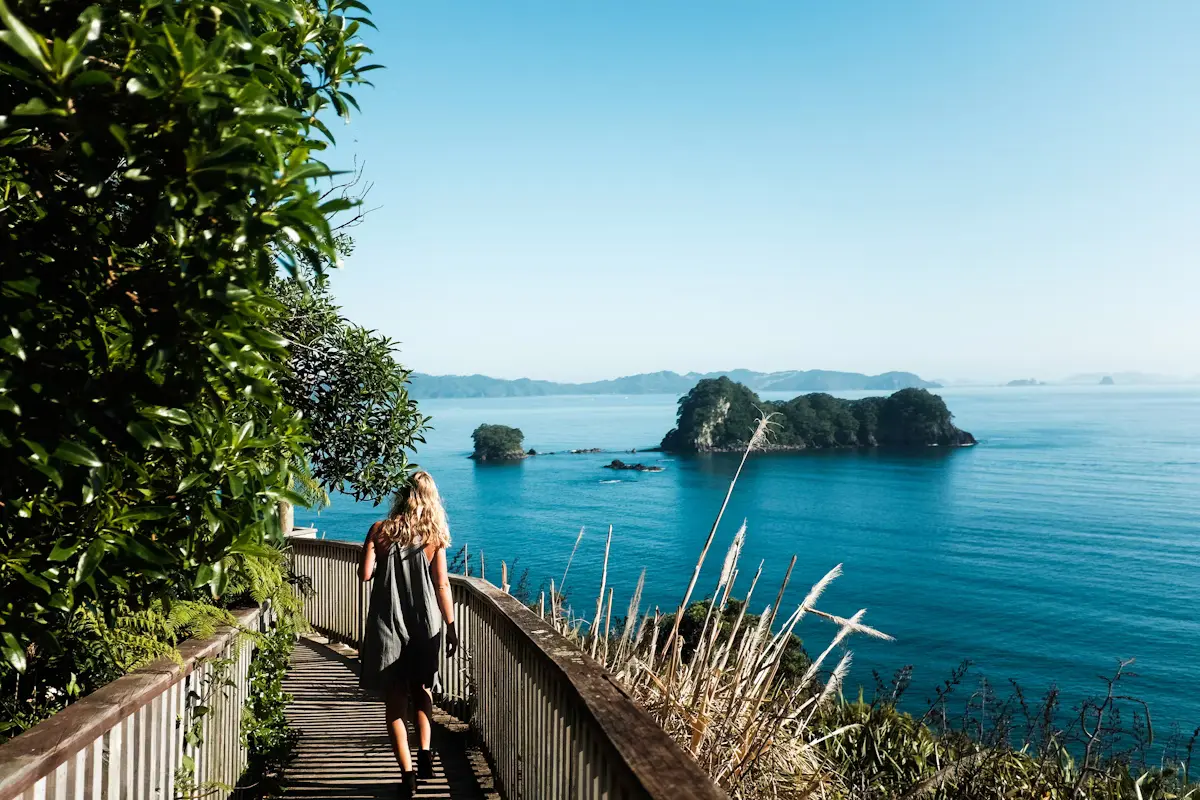
Cathedral Cove is a postcard perfect scene — a high stone arch sculpted by time, waves lapping gently beneath it. Getting there involves walking or kayaking from Hahei, but the moment you get there, you realize why it’s always photographed. Sunlight streams through the archway, and the sea glitters beyond. It’s one of those sites that draws you up short, stunned by how gorgeous nature is.
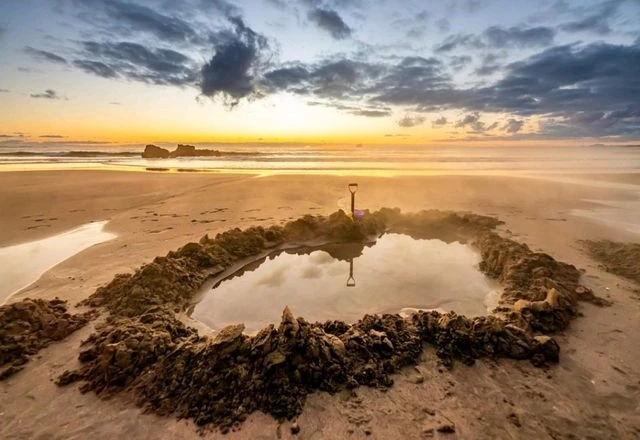
Hot Water Beach, Coromandel Peninsula – unique geothermal feature, best times to visit
Few things are as much fun as excavating your own hot pool in the sand. On the shores of Hot Water Beach, underground springs churn just beneath the surface, warming the sand at low tide. Tourists take small shovels, locate a warm area, and dig out their own beach spa. It’s best to go a couple of hours before or after low tide. The combination of ocean breeze and natural warmth makes it one of New Zealand’s most memorable beach adventures.
South Island Beaches
The South Island is quieter, more untamed, and somehow more mystical. The beaches run along golden bays, craggy cliffs, and isolated coves where sunbathing seals laze about. Abel Tasman National Park is popular for camping and kayaking, while the Otago coast has bizarre rock formations and fossilized forests.
Many South Island beaches are remote, accessible by foot or boat, which adds to their charm. Whether you’re after photography, wildlife encounters, or peaceful solitude, these southern shores will stay in your memory long after you leave.
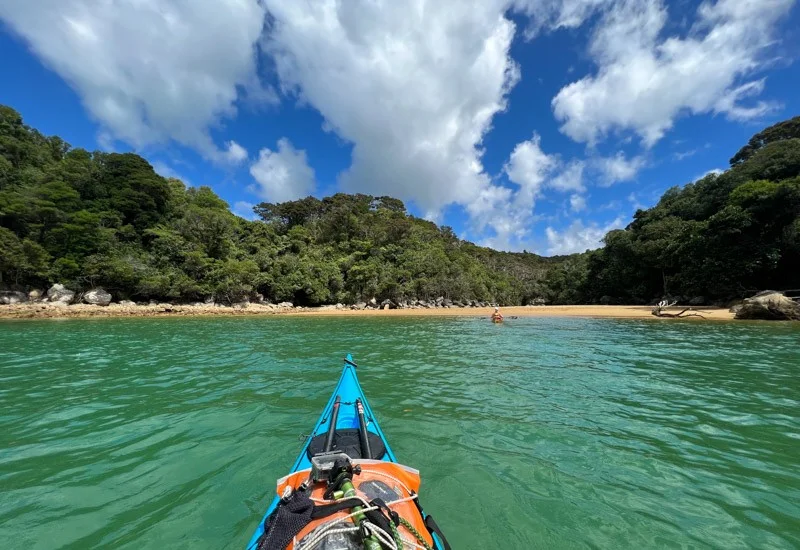
Anchorage, Abel Tasman National Park – kayaking, golden sand
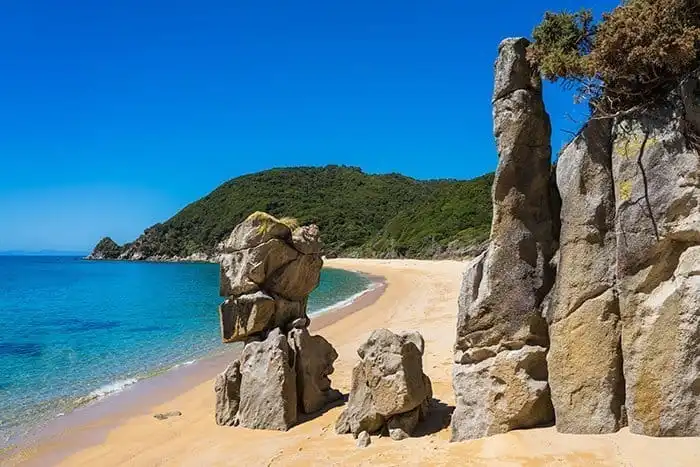
Anchorage Bay is like nature’s summons to take it easy. Accessed by trail or water taxi, Anchorage Bay greets tourists with peaceful golden beaches and soothing waves. Kayakers paddle the shoreline, discovering hidden inlets and coves. It’s the sort of place where days begin with birdsong and nights conclude with the sea lapping against the beach.
Pūrākaunui Bay, The Catlins – wildlife spotting, tranquility
Tranquil deep in The Catlins, Pūrākaunui Bay is all about quiet and solitude. Fringing the beach are high cliffs, and native bush reverberates with birdsong. Seals occasionally lie on the rocks without regard for strangers who stand quietly at a distance to observe. No crowds come to this beach — it’s for contemplation, for sense of how insignificant and connected we are to sea and land.
Wharariki Beach, Golden Bay – rock formations, photography
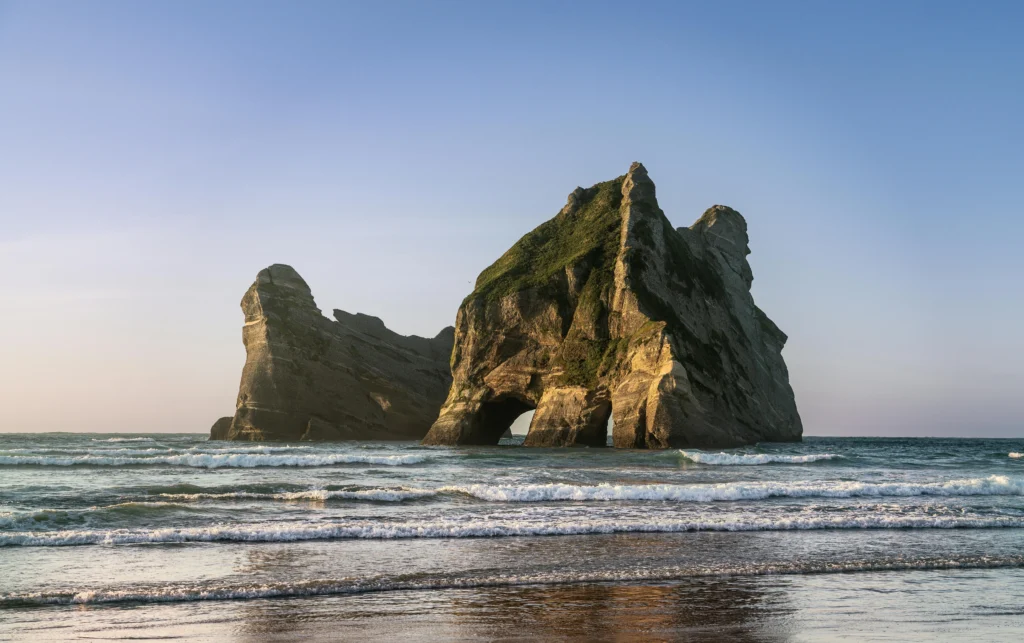
There are few locations that are as stunning as Wharariki Beach. Wind sculpted dunes and enormous arching rocks jut out of the sea like works of art. The beach is usually windy, too choppy for swimming, but great to walk on and photograph. When the tide comes in low, tidal pools around the rocks mirror the sky. It’s a photographer’s paradise, particularly at sunrise.
St Clair, Dunedin – surfing, local boardwalk
St Clair Beach brings the sea to Dunedin’s doorstep. Waves roll in hard and steady, ideal for surfers, and families like the boardwalk with cafés and an ocean pool. Locals come here in the night for coffee and chats as the sun sets below the horizon. It’s urban life with a dash of salt and sea air.
Waikuku Beach, near Christchurch – family-friendly, swimming
A short drive from Christchurch, Waikuku Beach has a friendly and leisurely feel. Its broad, peaceful beach is ideal for children playing in the shallow water or constructing driftwood fortifications. The beach has ample parking and easy access, making it a great location for family picnics or weekend retreats.
Scott’s Beach, Kahurangi National Park – isolation, scenic beauty
Hidden away within Kahurangi National Park, Scott’s Beach is as isolated as it is possible to get. The path there winds through bush, bursting suddenly into wide ocean vistas. The feeling of solitude is complete — just wind, waves, and wilderness. It’s every step worth it for tourists who yearn for serenity and beauty far removed from the tourist trail.
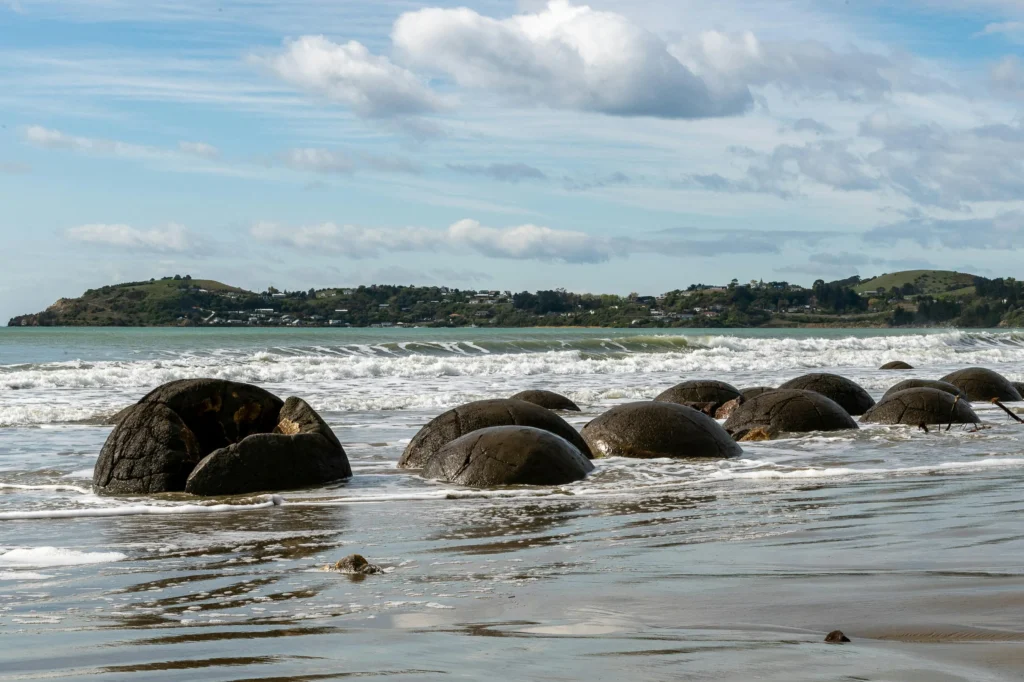
Moeraki Boulders are a bizarre and lovely sight — perfectly spherical stones on the beach like giants left them behind. At sunrise, when light catches them gently, they shine with gold and gray. Easy to stop at on the Otago coast and photographers’ favorite because it’s so uniquely different.
Curio Bay, Southland – fossil forest, marine life
Curio Bay has a sense of age to it. It is possible at low tide to look out across the remains of a fossilized forest, trees petrified over millions of years. Dolphins and small penguins occasionally pop up in the surf, reminding you that this is just as much a part of wildlife as it is of people.
Okarito, West Coast – kayaking, wildlife
Okarito Beach is serene and untouched. A lagoon behind the dunes becomes a playground for kayaks and bird spotters. It is inhabited by rare birds, including the white heron. The silence here is perfect — just the stroke of paddles and a distance away, waves.
Okains Bay, Banks Peninsula – Maori history, camping spots
Okains Bay combines culture and coastline. Along with its gentle sands, the area holds deep Maori history and a small museum preserving local heritage. Families camp nearby under starlit skies, listening to the ocean just beyond the trees.
Totaranui, Abel Tasman – camping, hiking trails
Totaranui Beach shines with golden sand and the vibrancy of adventurers who visit to camp, hike, and enjoy nature. It directly links to the Abel Tasman Coast Track, bringing relaxation and adventure. Quiet nights are spent here, with stars that extend endlessly in the sky.
Yes, snow falls mainly in mountainous regions and the South Island during winter months (June–August).
When to Visit
Summer (December to February) is warm weather and active beach life. For peace and quiet, especially, spring and autumn are the best — pleasant temperatures and less tourist traffic. Winter’s got its own appeal as well, particularly on the South Island, where dramatic light is great for terrific photographs.
Why It's Unique
New Zealand’s beaches have a unique combination — untamed adventure and serene quiet. Surf massive waves one day, then float in a hot spring another. Every coast has its own world, formed by culture, history, and geology. Very few nations fit this much beauty into a small area.
How to Reach
Most beaches are within easy reach by car, but a few — including Cathedral Cove and Scott’s Beach — have short walks or water taxis. Large highways from Auckland, Wellington, and Christchurch link to coastal towns, and signs along the way lead travelers to the shore.
Adventure Level
New Zealand’s beaches vary from quiet family beaches to wild surf coasts. Amateurs can test the safe, guarded bays, whereas those with a need for adventure go to Raglan or Piha to tackle tough waves. There is an adventure option here for all.