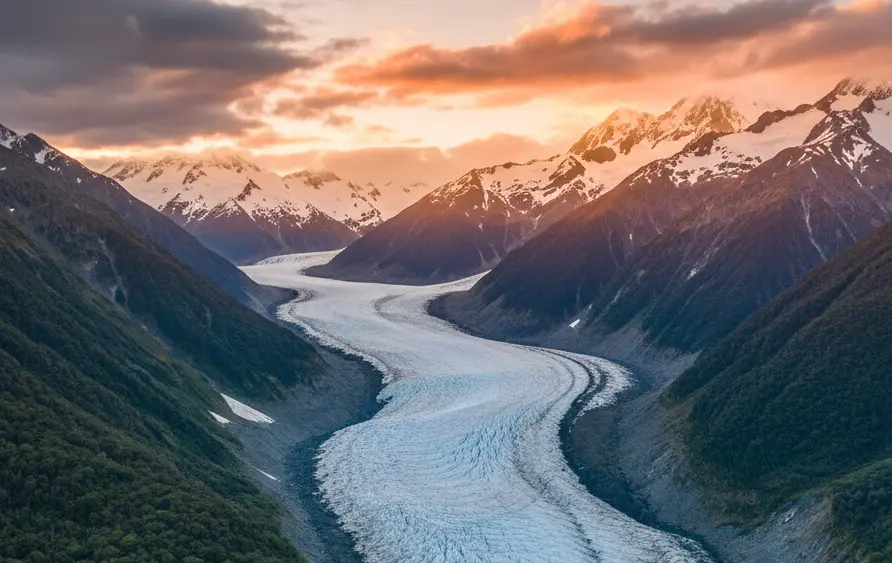
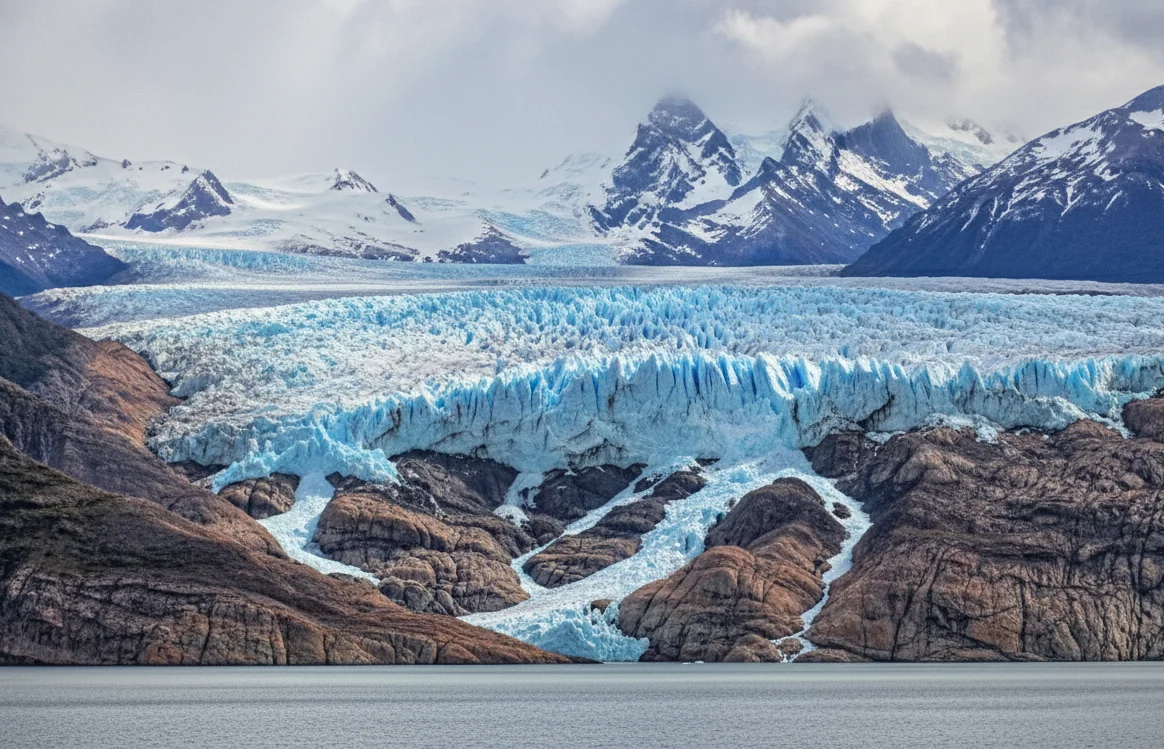
New Zealand is one of the few places in the world where glaciers cascade down mountains and nearly reach sea level and rainforests. For tourists, particularly from the USA, these snows feel commonplace yet startlingly alien — a combination of nature and awe. The majority of the glaciers are way deep within the Southern Alps, ringed by blue-green lakes, fog-shrouded valleys, and snowy summits that appear to have been hand-painted.
While the Alaska or Montana glaciers tower above, most in New Zealand are surprisingly accessible. You can hike through green forest one day and stand in front of ancient ice the next. From iconic Franz Josef and Fox Glaciers to huge Tasman Glacier, this guide takes you through the easiest places to visit, the hidden gems few understand, and some advice on how to visit them safely.
New Zealand boasts over 3,100 named glaciers, and what makes them so extraordinary is that they are relatively near sea level and thick rainforests. Elsewhere in the world, you cannot begin your day strolling under ferns and finish it at the side of a blue ice wall.
The South Island’s West Coast has the center of this frozen world. The valleys are brief here, the paths clearly marked, the vistas spectacular. To the east, in Aoraki / Mount Cook National Park, the glaciers sweep across high alpine basins. These striking contrasts — snow and forest, ice and ocean — make New Zealand’s glaciers a memory to cherish.
Most Accessible Glaciers for Easy Hikes
Other glaciers extend a warm welcome. They never require mountaineering prowess or grueling expeditions — only curiosity.
You can stroll up a peaceful valley walk that culminates in spectacular crevasse and waterfall views at Franz Josef Glacier. When you’ve had enough thrills, there are nearby hot springs to soak your aching muscles in, with vapor rising from the warmth against the mountain breeze.
Fox Glacier, the West Coast’s other jewel, is like entering two worlds. The hike starts beneath thick canopies of rainforest teeming with birdsong, and finishes at the edge of shining ice. As night descends, visitors stay overnight for the glow-worm walks, when the forest is aglow like the night sky.
Further inshore, close to Wanaka, is the Rob Roy Glacier Trail — a hiker’s delight for thrill and aesthetics. Swing bridges, cascading waterfalls, and the silence of falling snowflakes create a memorable stride.
Glacier
Location
Hike Duration
Difficulty
Unique
Franz Josef Glacier
West Coast, South Island
1.5 hrs
Easy
Hot springs close by
Fox Glacier
West Coast, South Island
1 hr
Easy
Glow-worm evening walks
Rob Roy Glacier
Near Wanaka
3-4 hrs
Moderate
Swing bridges & waterfalls
Iconic Glaciers in Aoraki/Mount Cook National Park
At the center of the Southern Alps is Tasman Glacier, New Zealand’s longest at close to 16 miles. Travelers can take Zodiacs or even kayak over floating icebergs, listening to the soft crackle of melting ice all around them. At its terminus is a milky-blue glacial lake, ringed with rocky walls and snow-melt streams.
Close by, the Hooker Glacier presents a more serene splendor. The Hooker Valley Track is one of New Zealand’s most popular tracks, taking you past swinging bridges and moraine walls until you have a glimpse that seems to be out of a dream. Close by, the Mueller Glacier stands with its serene power, best appreciated at the well-liked Mueller Hut — where sunsets soak the peaks in gold and the Milky Way tints the sky above.
Secret & Off-The-Beaten-Track Glaciers to Explore
Outside of the well-known tracks, New Zealand has glaciers that few visitors ever get to experience. The Dart Glacier, nestled between Wanaka and Glenorchy, is one of them. It sits far within rugged valleys of native bush and river crossings — a real wilderness experience.
Next is Brewster Glacier close to Haast Pass. It is not easy to get there; it’s steep climbing, weather unforgiving, but the payoff is silence and emptiness interrupted only by the rustle of wind on ice. In and around Twizel, the smaller ice fields and pristine Bryant Glacier provide serene areas for introspection — perfect for travelers who enjoy areas unmolested by throngs of people.
Best Glaciers for Adventure Activities
If adventure’s what drives your vacations, then New Zealand’s glaciers will not let you down. Heli-hiking is one of the most exhilarating means to experience Franz Josef and Fox Glaciers. Helicopters deposit you on the ice itself, where guides distribute crampons and take you through caves filled with a bright, otherworldly blue light. With each crunch underfoot, you are reminded that the glacier is alive and in motion.
At Tasman Glacier, kayak through floating icebergs, at times watching enormous pieces calve off into the water. It’s a serene yet intense moment — the sort that reminds you of nature’s scale. For those who want to stay above it all, scenic flights over the Southern Alpsshow endless ridges of snow and untracked valleys running to the horizon.
Scenic Huts & Trails Near Glaciers
One of the pleasures of glacier travel in New Zealand is its system of mountain huts. Each of them is a treat after a long tramp.
The Mueller Hut, which has a view over the Mueller Glacier, is arguably the best known. On good nights, it’s impossible to find better stargazing — the Southern Cross over Mount Cook is a sight few ever forget.
The French Ridge Hut, close to the Rob Roy Glacier, presents a snug alpine shelter among broad valleys and snow-fed rivers. Then there’s Brewster Hut, perched above Haast Pass, famous for its blazing sunsets and limitless views of waterfalls cascading far below.
Hut
Closest Glacier
Hike Time
Best Experience
Mueller Hut
Mueller Glacier
4-5 hrs
Stargazing & panoramic views
French Ridge Hub
Rob Roy Glacier
6 hrs
Remote alpine landscapes
Brewster Hut
Brewster Glacier
3-4 hrs
High altitude sunsets
When is the Best Time to Visit New Zealand’s Glaciers?
Summer (December–February) provides long days, well-maintained walking trails, and pleasant temperatures — ideal for glacier activities. However, it is peak season as well. Spring and autumn offer fewer visitors and cooler breezes, providing photographers with great light for landscape photographs.
Winter, however, converts the whole South Island. The valleys are covered with white, the atmosphere becomes chilly, and the glaciers shine with more intensity than ever. A few visitors combine their glacier tour with stargazing at the Mount John Observatory, which is among the world’s best dark-sky reserves.
Essential Tips for Visiting Glaciers Safely
Glaciers are lovely but unpredictable. Always trek with experienced guides who issue safety equipment and know how to cross crevasses. Never walk on the ice by yourself — even seasoned hikers can be caught off guard.
The weather in the Southern Alps is fast-changing. Flights are canceled and trails are closed with short notice. Bring warm layers, waterproofs, and above all, patience. As one Franz Josef local guide once quipped, “The glacier will wait for you, but it won’t wait for bad decisions.“
Glaciers vs. Lakes – Other Scenic Spots Nearby
The glacier areas also conceal some of New Zealand’s most picturesque lakes. Lake Tekapo and Lake Pukaki close to Mount Cook glimmer in vivid turquoise, tinted by minute glacial silt. Dawn often produces reflections so calm they appear unreal.
Nearer the coast, Lake Matheson reflects Mount Cook and Mount Tasman symmetrically. Near Otago, Lake Wanaka and Lake Hawea entice serene rest after extensive trekking. Some tourists even take the TranzAlpine train, considered one of the world’s most scenic train journeys, linking these lakes and valleys like a series of pearls strung together.
The world’s largest glacier is Lambert Glacier in Antarctica, stretching over 400 km long.
Why It's Unique
New Zealand’s glaciers are unique in that they are so near rainforests and sea level. Not many spots on the planet allow you to hike from mossy woods directly to ancient ice in less than an hour. Accessibility, aesthetics, and diversity combine to make them irreplaceable.
When to Visit
Visit between November and April for open trails and clear skies. June to August provides quieter trails and dramatic winter landscapes for winter sports enthusiasts and photographers.
How to Reach
The majority of the glaciers are found on the South Island. Fly in to Christchurch or Queenstown, get a car, and drive on State Highway 6 for the West Coast glaciers. The trip itself is picturesque, going past beaches, rain forests, and mountain passes.
Adventure Level
Ranging from easy valley walks to heli-hiking and glacier climbs, New Zealand caters to every level of traveler. Even if you’re not a mountaineer, you’ll still find ways to experience the magic of the ice.